


- Consumer Products
Back
Consumer Products
- Switches and Sockets
- Accessories
- Wires, Cables and Tapes
- Switchgear and Protection Devices
- PVC Conduits and Accessories
Back
PVC Conduits and Accessories

- Smart Homes and Buildings
Back
Smart Homes and Buildings
- Fans and Ventilation
- Water Heaters
- LED Lighting
- Solar
- Modular Kitchen
Back
Modular Kitchen

- Home Advancements
Back
Home Advancements

- Power Tools
Back
Power Tools
- EV Charger and Accessories
- Home Appliances
Back
Home Appliances
- Industrial Products
- Inspirations
- About Us
Back
About Us
- Our Story
Back
Our Story
- Manufacturing Excellence
Back
Manufacturing Excellence
- CSR
Back
CSR
- Careers
Back
Careers
- Our Story



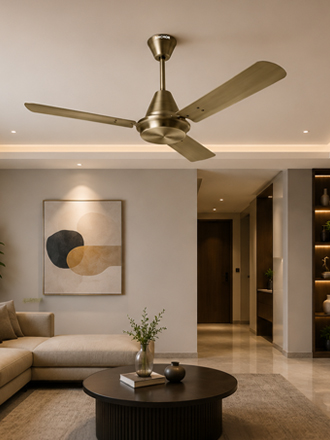


Many people get confused when shopping for fans, particularly between exhaust fan vs ventilation fan. This is common if you are looking for a fan that keeps spaces fresh without running up the electricity bill. The difference between exhaust fan and ventilation fan comes down to how each one moves air, with one focusing on pulling out bad air and the other bringing in fresh breeze. An exhaust fan works great for quick clearing, while a ventilation fan maintains a steadier comfort. Even a multipurpose fan can handle both jobs in smaller spaces. This guide explains everything clearly so you can choose wisely depending on what your home needs.
What is an Exhaust Fan?
An exhaust Fan draws moist or smoky air from inside a room and sends it straight outside through a duct, which makes it perfect for places like kitchens where fumes build up fast. It creates strong suction to handle steam and smells without letting them linger.
- The blades turn quickly to suck air toward the back and out through a wall duct.
- A grille with louvers blocks rain, insects, or backdrafts from coming in.
- You mount it high on walls or ceilings near windows for best pull.
- Sizes from six to fifteen inches suit tiny bathrooms or bigger cooking areas.
- Some quieter versions work in bedrooms for occasional use without disturbance.
What is a Ventilation Fan?
A ventilation fan helps improve the air quality inside a room by gently moving air around or slowly bringing in fresh air from outside. It is especially useful in living areas or hallways, where air can feel stuffy and heavy. Instead of forcefully removing large amounts of air, it works quietly over time to keep the indoor space comfortable and well‑circulated, supporting a healthier and more pleasant environment.
- Slatted covers let air pass through in several directions for even coverage.
- Blades spin at moderate speeds to create a light breeze without too much noise.
- Plastic construction holds up well against rust in damp climates.
- Wall or ceiling placement draws cooler air into warmer indoor spaces.
- Low-power motors make it suitable for running throughout the day.
How Exhaust Fans and Ventilation Fans Support Indoor Airflow
Both types improve the overall air quality in homes, but they address different needs like moisture control or general freshness. The difference between exhaust fan and ventilation fan means one excels at cleanup while the other keeps balance.
Together they create healthier spaces.
- Exhaust Fan pulls out humidity and odors to stop mold in wet areas.
- Ventilation fan replaces used air with outside breezes to reduce staleness.
- Using both ensures good circulation without hot pockets or damp buildup.
- Kitchens benefit from exhaust during meals and ventilation for daily use.
Bathrooms stay dry faster with exhaust after showers and ventilation for airing.
Understanding How Exhaust Fans and Ventilation Fans Work
Exhaust fan creates more of an outward pull while ventilation fan spreads air evenly, with each type using motors suited to their job. Their blade designs and directions are another distinguishing factor between exhaust fan vs ventilation fan.
- Exhaust Fan tilts blades backward to force air into ducts and outdoors.
- Ventilation fan angles blades forward to push air across the room gently.
- Motors in exhaust models run stronger for suction, while ventilation uses lighter ones.
- Capacitors help start the spin smoothly on standard home power supplies.
- Grilles and impellers guide airflow precisely without wasting energy.
Performance Comparison of Exhaust Fans vs Ventilation Fans
There are a few key differences in how they handle air speed, noise, and power, making the choice obvious for bathrooms versus living rooms. This table lays out the difference between exhaust fan and ventilation fan side by side.
Feature | Exhaust Fan | Ventilation Fan |
|---|---|---|
Main Purpose | Pulls out stale moist air fast | Spreads fresh air inside softly |
Air Direction | Out through duct to outside | Around the room or inward |
Speed | 1200-1400 RPM strong pull | 900-1200 RPM light flow |
Noise | Medium to loud when running | Quiet for longer use |
Power Use | 20-50 watts more pull | 15-30 watts lower daily cost |
Ideal Spots | Kitchens bathrooms steamy areas | Hallways bedrooms dry rooms |
Sizes Available | 6-15 inches broad range | 8-12 inches compact fit |
Build Material | Metal or plastic durable | Lightweight plastic rust free |
How to Choose Between an Exhaust Fan and a Ventilation Fan for Your Space
Your room's moisture level, size, and daily use should be the main factors in deciding between an exhaust fan vs ventilation fan.
Weigh these factors carefully.
- Install exhaust Fan in kitchens for fumes and bathrooms for post-shower steam.
- Go with ventilation fan for living rooms or corridors needing constant freshness.
- Apartments might prefer a multipurpose Fan that switches between pulling and pushing air.
- Check wattage for bills, favoring ventilation for rooms running all day.
- Larger areas need bigger sizes or two fans for even coverage.
- Humid coastal spots call for rust-proof metal exhaust Fan bodies.
- Quiet operation matters for bedrooms, so pick low-decibel ventilation fan models.
Conclusion
Figuring out the functional differences between an exhaust fan vs ventilation fan allows you to pick fans that help beat humidity and odors with the right tool for each room. The difference between exhaust fan and ventilation fan lies in strong removal versus gentle circulation, both vital for healthy air.
FAQs
Can a ventilation fan replace an exhaust fan?
A ventilation fan cannot fully replace an exhaust Fan because it circulates air rather than removing heavy moisture or smells. Use exhaust fans where steam builds up like in kitchens or bathrooms. Ventilation fans are more suited to lighter needs.
Do exhaust fans bring in fresh air?
Exhaust Fan mainly removes inside air and lets fresh air seep in through doors or windows naturally. It does not pull new air actively like ventilation fan.
Which fan is best for bathrooms or kitchens?
Exhaust Fan suits bathrooms and kitchens best by pulling steam and cooking fumes outside quickly. Ventilation fan falls short on heavy moisture jobs.
Is a ventilation fan more energy-efficient than an exhaust fan?
Ventilation fan runs more efficiently at fifteen to thirty watts for steady use. Exhaust Fan draws twenty to fifty watts but only needs short bursts of use.
Can exhaust fans and ventilation fans be used together?
Yes, run exhaust fan on high for removal and ventilation fan low for circulation to create a cross flow. A multipurpose Fan does both in one unit with reversible settings.
Share this post


Select more categories
Share this postX
Category
You may also like
Difference Between Ceiling Fan and Table Fan: A Complete Comparison Guide
Read More
Ceiling Fan Power Consumption: How Much Energy Does Your Fan Really Use?
Read More
BLDC Fans vs Normal Fans: Key Differences Explained
Read More
Why Your Home Deserves More Than Just an Ordinary Ceiling Fan
Read More
A Comprehensive Guide to Different Types of Fans
Read More
How to Choose the Right Ceiling Fan for Your Home
Read More

Download Mobile Apps
- Wizz Smart


- MirAIe
- Anchor Smart Saver
- Anchor Samridhi


